SITE GUIDE
SEARCH
REVIEWS
FEATURES
NEWS
Etcetera and
Short Term Listings
LISTINGS
Broadway
Off-Broadway
NYC Restaurants
BOOKS and CDs
OTHER PLACES
Berkshires
London
California
New Jersey
DC
Philadelphia
Elsewhere
QUOTES
TKTS
PLAYWRIGHTS' ALBUMS
LETTERS TO EDITOR
FILM
LINKS
MISCELLANEOUS
Free Updates
Masthead
Writing for Us
Stage-Related Film, TV and DVD Talk
at
CurtainUp
By Elyse Sommer
Updated May 12, 2013
(For previous edition of this page go here)
Les Miserables
Les Misérables the movie by Lizzie Loveridge
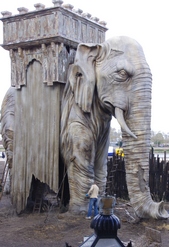
In April 2012 the wonderful site of the Royal Naval College on the River Thames which now houses the University of Greenwich and Trinity College of Music was turned into Paris for the riots of 1832. One of the sparks for the riot was the death of the Napoleonic General Lamarque, long time an opponent of the restoration of the French monarchy, and these huge funeral carts were ready on site for the filming of Lamarque's funeral procession. The sculptural mock up of a large (78 feet high) elephant had been placed in the Place de la Bastille and it had been intended to cast it in bronze. This elephant, which features in Hugo's novel as a hiding place for the street urchin Gavroche, formed a part of the set and next to it was created the barricade built by the rioters.
So a January weekend saw the opening in Britain of the eagerly anticipated film of the musical. The opening scene on stage is of prisoners breaking up rocks as Jean Valjean laments that his identity is a number, "24601". In the film the opening is a computer generated scene of a prison galleon ship wreck with convicts pulling on ropes and Valjean (Hugh Jackman) is ordered by Javert (Russell Crowe) to lift the broken flagpole with the tricoleur. When the casting was first announced, as Crowe is the thicker set of the men, it was assumed that he would play Valjean with Jackman as the taller thinner inspector but people had forgotten how built Jackman is and that his singing voice earned him the lead as Curly in the National Theatre's production of Oklahoma! way back in 1998.
But the real delight for me was spotting English stage actors in the smaller roles. In the Mayor's factory in Toulon, years later where Valjean is a successful businessman, Kate Fleetwood (Patrick Stewart's Lady Macbeth) is magnificent as Fantine's Nemesis, Factory Woman Number 1. Fleetwood bullies Fantine and then with mock humility manipulates the foreman (Michael Jibson, no stranger himself to the London theatre stage) into sacking Fantine. As Fantine hits rock bottom, and Anne Hathaway gives a heart breaking performance, her last client who gets her arrested is the fop Bamatabois, Bertie Carvel, the lead, Headmistress Miss Trunchbull, in another Royal Shakespeare Company successful musical Matilda. Trevor Nunn and the Royal Shakespeare Company first staged this version of Boublil and Schönburg's musical in 1985 after the French version had failed to take off.
Some of the original actors have been offered a part in the movie and theatre buffs will be thrilled to spot Colm Wilkinson, the original Valjean, as the kindly bishop. Daniel Evans now Artistic Director of Sheffield Theatres plays a pimp and Hannah Waddingham, a former Spamalot Lady of the Lake and Christine in Phantom, is Factory Woman number 2 for the first rendition of "At The End of the Day". Two other British actors who I've never seen live on stage, Sacha Baron Cohen and Helena Bonham Carter play the comic innkeepers Monsieur and Madame Thenardier and, as their daughter Eponine, Samantha Barks who was a runner up in a BBC talent contest to find the Nancy for a revival of Oliver. The Eponines are always dark haired girls with wide set eyes and square faces, I wonder why? I do need to read Hugo's novel someday! Frances Ruffelle is the other actor from the original cast. She played Eponine as a child in 1985 and in 2013 takes the role Whore 1.
Patrick Godfrey as Gillnormand and Richard Corderey as the Duc de Raguse are veterans of the Royal Shakespeare Company. Linzi Hately, John Dankworth and Cleo Laines daughter Jacqui Dankworth have small roles. Even the Gavroche, Daniel Huddlestone is a veteran of the West End stage having played Gavroche in the theatre having launched his acting career as "Nipper" in Rupert Goold's Oliver! in 2009.
Tom Hooper, director of The King's Speech has concentrated on camera close up so the main difference in the experience of the film is this; seeing the emotion on the faces of the singers and the context is allowed to interfere with the vocal delivery and so gives a more realistic impression than the volume and delivery required to fill the theatre, be it the Barbican, The Palace or The Queen's. Carrying Marius, Eddie Redmayne through the Parisian sewers doesn't make the impact in the film that it does on stage with clever lighting and projection, and I had the impression that quite a lot has been cut from the ballroom scene, which is just a vehicle for the social climbing Thenardiers who like turds will rise. Eddie Redmayne has the facial angst of the student protester left behind in "Empty Chairs and Empty Tables" and graces the London stage regularly, last having been seen as Richard II at the Donmar Warehouse. The original Marius was Michael Ball
I was less sure about the aesthetic of computer generated Mansard roofs onto Sir Christopher Wren's Royal Hospital Greenwich, now called the Old Royal Naval College, to imitate the Parisian skyline but it was fun recognising some of the less well known shots of the Greenwich architecture. The original inspiration for the Royal Hospital, a home for retired and infirm sailors was the French initiative, Les Invalides, in Paris.
Hugh Jackman and Anne Hathaway thoroughly deserve the acting awards already bestowed. Russell Crowe is less of a powerful singer but a menacing presence as Inspector Javert in this story which was said to have inspired the series and film, The Fugitive. We see Javert in the Painted Hall before quelling the student revolution. Ironically the paintings on the ceiling in the Painted Hall are allegorical propaganda against the English Navy's traditional enemy, the French.
I've lost count but I think I've probably seen the West End theatre production of Les Miserables six or seven times and I also saw and reviewed the slimmed down 25th anniversary production at the Barbican in 2010. I'd happily see it again! And the film . . . I think I'd notice other people who have crept into the cast. I've a long way to go to catch up with Sally Frith the Gloucestershire woman reported this week as having seen Les Miserables 957 times since her first trip in 1988.
Footnote: A few days after the film crew moved out in April 2012, the Queen was due to reopen the Cutty Sark, Greenwich's old tea clipper, which was restored after a fire destroyed much of it in 2006. As the film crew moved out the Naval College lawns which had been covered with barricades, marching soldiers and straw and mud were brown and yellow. As the Queen was due to ride through the Naval College grounds a decision was taken to spray paint the grass. Apparently everywhere the Queen goes, it always smells of fresh paint. But whoever chose the shade didn't get grass green but blue green so that areas looked turquoise. Straight out of Alice in Wonderland.
The Good Wife. Though the just ended season had its problem episodes (notably the business with Kalinda and her awful husband). But the series got its mojo back towards the end of the season, especially in the final episode when all sorts of loose threads were tied up and the groundwork was laid for new intriguing story line possibilities.
In terms of being a showcase for New York based stage actors, The Good Wife continues to be the creme-de-la creme. Its three main legal eagles — Juliana Margulies, Josh Charles and Christine Baranski— are all seasoned stage thespians. That's also true for key regular players: Chris Noth is Alicia's Peter who was responsible for the whole good wife issue and who has now been elected Governor greatly helped by his campaign manager Eli Gold, a favorite character played by Alan Cumming. Other regulars include Mary Beth Heil as Alicia's mother-in-law Jackie.
The weekly legal case also continues to open the door for terrific stage actors to be tabbed for guest spots as defendants, case instigators, lawyers and judges. Some of these guest players were so popular that they were brought back so that this year's new and old familiar to theatergoers included T.R. Knight, Denis O'Hare, Ana Gasteyer, Martha Plimpton, Dylan Baker and Estelle Parsons and Mamie Gummer.
Even the regulars found time for some interesting departures from their Good Wife< personas. Diane Lockhart donned a blonde curly wig to play a rich socialite in On Your Toes, the popular Encores! series final musical revival. Being a powerful litigator on screen hasn't made her lose her flair for musical comedy.
And the versatile Allan Cumming abandoned his suit-and-tie, neatly coiffed political operative look to play Macbeth-- not just the Scottish Thane but all the characters in Shakespeare's famous tragedy.
While I found this solo Macbeth a bit self-indulgent, Curtainup's Shakespeare expert, Deirdre Donovan, loved it.
Finally, since you're going to have to wait until Fall to see Alicia's move to aw firm works out and how being the First Lady of the State plays out, here's a British 3-parter about another political wife's finding herself faced with her mate's bad behavior. It's called The Politician's Wife and British stage actress Juliet Davidson is brilliant as the disillusioned wife. Here's a link to the DVD from Acorn Media: The Politician's Wife
Smash -- yes, it's coming back. The 2nd season begins Feb. 5, 2013 and will feature a host of guest stars: Jennifer Hudson, Jesse L. Martin, Sean Hayes, Bernadette Peters, and -- surprise, surprise-- Liza Minelli playing her own larger than life self.
The Newsroom I've only recently gotten around to catching up with the closest thing to The West Wing. Yet as a series just about 100% cast with terrific stage actors, it can't be beat. The story's lead, anchor man Will McAvoy is very well portrayed by Jeff Daniels (one of the stars of the Broadway hit God of Carnage. While Emily Mortimer as MaKenzie McHale, Will's new executive producer and ex-girlfriend is know to US audiences mostly for her big and small screenwork, she has played Shakespeare in London. A secndary romance involves Mac's producer John Gallagher who first lit up the New York Stage in the musical Spring Awakening and associate producer Allison Pill who has had some terrific stingts on and off-Broadway. To give that sub-plot a triangular twist there's Thomas Sadoski, last seen in Other Desert Cities. Another key player is Sam Waterston as the ACN news diision's president Charlie Skinner. The guest slots so far have included a number of stage as well as screen regulars: Jane Fonda as Leona Lansing: CEO of Atlantis World Media (AWM), the parent company of ACN, Chris Messina as her sun and ACN's president, Daid Harbour as Elliot Hirsch: the anchor for Don's new program on the network; Hope Davis as goossip columnis. There are and no doubt will be more. While more than a bit talky, the show is nothing less than timely and intelligent-- and since it's HBO, no commercials.
While the series' creator Aaron Sorkin is known to most people for his TV scripting, he's also the author of the play A Few Good Men, which opened at Broadway's Music box in 1989 for a 497-perfrmance run and was also made (script by Sorkin) into a popular movie.
August: Osage County Meryl Streep has taken on the role of dying dowager Violet Weston; Julia Roberts plays daughter Barbara Fordham; Chris Cooper is. Violet's Brother-in-law; Margo Martindale is Mattie Fae Aiken; Abigail Breslin last seen on Broadway in the reival of The Miracle worker and is Barbara's Daughter.
News for Downton Abbey Fans
Broadway theater goers had a chance to see Dan Stevens, Downton's romantic lead on Broadway where he courted another heiress, this one the American spinster Catherine Sloper (film actress Jessica Chastain) in a new revial of The Heiress, the stage adaptation of the Henry James novel Washington Square.. Directed by Moises Kaufman, a director not usually associated with golden oldie vehicles like this. Stevens was a big hit in this less than heroic role and has decided to pursue new adventures. That means he had to be written out of Downton Abbey-- and so he was, via a fatal auto accident.. Howeer, though Chastain got decidedly mixed reviews, she w
Once This little engine that could turn into a huge stage hit has earned back its investment and continues on Broadway with a replacement cast, as well as crossing the pond to London. To read my review of the production go here. Back to Index of Topics
Updated May 12, 2013
(For previous edition of this page go here)
|
Faorite Stage Actor Heavy TV Series: The Good Wife Smash-- News of the TV Musical turned Soapsical s HBO's The Newsroom Small Screen Watching Notes From a Sidelined Theater Critic - Part Two: Lively If Not Live Theater on my IPad — House of Cards via Netflix and Kenneth Lonergan's Film Margaret at HBO Les Miserables -- A very Special Review from Curtainup's London Critic News for Downton Abbey Fans Stage-to-Screen August: Osage County-- the Movie Continuing Screen-to-Stage Wows: Once, the indie film continues as Broadway's hottest big little show |
Les Miserables
|
In April 2012 the wonderful site of the Royal Naval College on the River Thames which now houses the University of Greenwich and Trinity College of Music was turned into Paris for the riots of 1832. One of the sparks for the riot was the death of the Napoleonic General Lamarque, long time an opponent of the restoration of the French monarchy, and these huge funeral carts were ready on site for the filming of Lamarque's funeral procession. The sculptural mock up of a large (78 feet high) elephant had been placed in the Place de la Bastille and it had been intended to cast it in bronze. This elephant, which features in Hugo's novel as a hiding place for the street urchin Gavroche, formed a part of the set and next to it was created the barricade built by the rioters.
So a January weekend saw the opening in Britain of the eagerly anticipated film of the musical. The opening scene on stage is of prisoners breaking up rocks as Jean Valjean laments that his identity is a number, "24601". In the film the opening is a computer generated scene of a prison galleon ship wreck with convicts pulling on ropes and Valjean (Hugh Jackman) is ordered by Javert (Russell Crowe) to lift the broken flagpole with the tricoleur. When the casting was first announced, as Crowe is the thicker set of the men, it was assumed that he would play Valjean with Jackman as the taller thinner inspector but people had forgotten how built Jackman is and that his singing voice earned him the lead as Curly in the National Theatre's production of Oklahoma! way back in 1998.
But the real delight for me was spotting English stage actors in the smaller roles. In the Mayor's factory in Toulon, years later where Valjean is a successful businessman, Kate Fleetwood (Patrick Stewart's Lady Macbeth) is magnificent as Fantine's Nemesis, Factory Woman Number 1. Fleetwood bullies Fantine and then with mock humility manipulates the foreman (Michael Jibson, no stranger himself to the London theatre stage) into sacking Fantine. As Fantine hits rock bottom, and Anne Hathaway gives a heart breaking performance, her last client who gets her arrested is the fop Bamatabois, Bertie Carvel, the lead, Headmistress Miss Trunchbull, in another Royal Shakespeare Company successful musical Matilda. Trevor Nunn and the Royal Shakespeare Company first staged this version of Boublil and Schönburg's musical in 1985 after the French version had failed to take off.
Some of the original actors have been offered a part in the movie and theatre buffs will be thrilled to spot Colm Wilkinson, the original Valjean, as the kindly bishop. Daniel Evans now Artistic Director of Sheffield Theatres plays a pimp and Hannah Waddingham, a former Spamalot Lady of the Lake and Christine in Phantom, is Factory Woman number 2 for the first rendition of "At The End of the Day". Two other British actors who I've never seen live on stage, Sacha Baron Cohen and Helena Bonham Carter play the comic innkeepers Monsieur and Madame Thenardier and, as their daughter Eponine, Samantha Barks who was a runner up in a BBC talent contest to find the Nancy for a revival of Oliver. The Eponines are always dark haired girls with wide set eyes and square faces, I wonder why? I do need to read Hugo's novel someday! Frances Ruffelle is the other actor from the original cast. She played Eponine as a child in 1985 and in 2013 takes the role Whore 1.
Patrick Godfrey as Gillnormand and Richard Corderey as the Duc de Raguse are veterans of the Royal Shakespeare Company. Linzi Hately, John Dankworth and Cleo Laines daughter Jacqui Dankworth have small roles. Even the Gavroche, Daniel Huddlestone is a veteran of the West End stage having played Gavroche in the theatre having launched his acting career as "Nipper" in Rupert Goold's Oliver! in 2009.
Tom Hooper, director of The King's Speech has concentrated on camera close up so the main difference in the experience of the film is this; seeing the emotion on the faces of the singers and the context is allowed to interfere with the vocal delivery and so gives a more realistic impression than the volume and delivery required to fill the theatre, be it the Barbican, The Palace or The Queen's. Carrying Marius, Eddie Redmayne through the Parisian sewers doesn't make the impact in the film that it does on stage with clever lighting and projection, and I had the impression that quite a lot has been cut from the ballroom scene, which is just a vehicle for the social climbing Thenardiers who like turds will rise. Eddie Redmayne has the facial angst of the student protester left behind in "Empty Chairs and Empty Tables" and graces the London stage regularly, last having been seen as Richard II at the Donmar Warehouse. The original Marius was Michael Ball
I was less sure about the aesthetic of computer generated Mansard roofs onto Sir Christopher Wren's Royal Hospital Greenwich, now called the Old Royal Naval College, to imitate the Parisian skyline but it was fun recognising some of the less well known shots of the Greenwich architecture. The original inspiration for the Royal Hospital, a home for retired and infirm sailors was the French initiative, Les Invalides, in Paris.
Hugh Jackman and Anne Hathaway thoroughly deserve the acting awards already bestowed. Russell Crowe is less of a powerful singer but a menacing presence as Inspector Javert in this story which was said to have inspired the series and film, The Fugitive. We see Javert in the Painted Hall before quelling the student revolution. Ironically the paintings on the ceiling in the Painted Hall are allegorical propaganda against the English Navy's traditional enemy, the French.
I've lost count but I think I've probably seen the West End theatre production of Les Miserables six or seven times and I also saw and reviewed the slimmed down 25th anniversary production at the Barbican in 2010. I'd happily see it again! And the film . . . I think I'd notice other people who have crept into the cast. I've a long way to go to catch up with Sally Frith the Gloucestershire woman reported this week as having seen Les Miserables 957 times since her first trip in 1988.
Footnote: A few days after the film crew moved out in April 2012, the Queen was due to reopen the Cutty Sark, Greenwich's old tea clipper, which was restored after a fire destroyed much of it in 2006. As the film crew moved out the Naval College lawns which had been covered with barricades, marching soldiers and straw and mud were brown and yellow. As the Queen was due to ride through the Naval College grounds a decision was taken to spray paint the grass. Apparently everywhere the Queen goes, it always smells of fresh paint. But whoever chose the shade didn't get grass green but blue green so that areas looked turquoise. Straight out of Alice in Wonderland.
The Good Wife. Though the just ended season had its problem episodes (notably the business with Kalinda and her awful husband). But the series got its mojo back towards the end of the season, especially in the final episode when all sorts of loose threads were tied up and the groundwork was laid for new intriguing story line possibilities.
In terms of being a showcase for New York based stage actors, The Good Wife continues to be the creme-de-la creme. Its three main legal eagles — Juliana Margulies, Josh Charles and Christine Baranski— are all seasoned stage thespians. That's also true for key regular players: Chris Noth is Alicia's Peter who was responsible for the whole good wife issue and who has now been elected Governor greatly helped by his campaign manager Eli Gold, a favorite character played by Alan Cumming. Other regulars include Mary Beth Heil as Alicia's mother-in-law Jackie.
The weekly legal case also continues to open the door for terrific stage actors to be tabbed for guest spots as defendants, case instigators, lawyers and judges. Some of these guest players were so popular that they were brought back so that this year's new and old familiar to theatergoers included T.R. Knight, Denis O'Hare, Ana Gasteyer, Martha Plimpton, Dylan Baker and Estelle Parsons and Mamie Gummer.
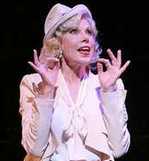
Christine Baranski as Peggy Porterfield
(Photo: Joan Marcus) |
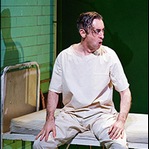
Alan Cumming as Macbeth and all the others
|
Finally, since you're going to have to wait until Fall to see Alicia's move to aw firm works out and how being the First Lady of the State plays out, here's a British 3-parter about another political wife's finding herself faced with her mate's bad behavior. It's called The Politician's Wife and British stage actress Juliet Davidson is brilliant as the disillusioned wife. Here's a link to the DVD from Acorn Media: The Politician's Wife
Smash -- yes, it's coming back. The 2nd season begins Feb. 5, 2013 and will feature a host of guest stars: Jennifer Hudson, Jesse L. Martin, Sean Hayes, Bernadette Peters, and -- surprise, surprise-- Liza Minelli playing her own larger than life self.
The Newsroom I've only recently gotten around to catching up with the closest thing to The West Wing. Yet as a series just about 100% cast with terrific stage actors, it can't be beat. The story's lead, anchor man Will McAvoy is very well portrayed by Jeff Daniels (one of the stars of the Broadway hit God of Carnage. While Emily Mortimer as MaKenzie McHale, Will's new executive producer and ex-girlfriend is know to US audiences mostly for her big and small screenwork, she has played Shakespeare in London. A secndary romance involves Mac's producer John Gallagher who first lit up the New York Stage in the musical Spring Awakening and associate producer Allison Pill who has had some terrific stingts on and off-Broadway. To give that sub-plot a triangular twist there's Thomas Sadoski, last seen in Other Desert Cities. Another key player is Sam Waterston as the ACN news diision's president Charlie Skinner. The guest slots so far have included a number of stage as well as screen regulars: Jane Fonda as Leona Lansing: CEO of Atlantis World Media (AWM), the parent company of ACN, Chris Messina as her sun and ACN's president, Daid Harbour as Elliot Hirsch: the anchor for Don's new program on the network; Hope Davis as goossip columnis. There are and no doubt will be more. While more than a bit talky, the show is nothing less than timely and intelligent-- and since it's HBO, no commercials.
While the series' creator Aaron Sorkin is known to most people for his TV scripting, he's also the author of the play A Few Good Men, which opened at Broadway's Music box in 1989 for a 497-perfrmance run and was also made (script by Sorkin) into a popular movie.
August: Osage County Meryl Streep has taken on the role of dying dowager Violet Weston; Julia Roberts plays daughter Barbara Fordham; Chris Cooper is. Violet's Brother-in-law; Margo Martindale is Mattie Fae Aiken; Abigail Breslin last seen on Broadway in the reival of The Miracle worker and is Barbara's Daughter.
News for Downton Abbey Fans
Broadway theater goers had a chance to see Dan Stevens, Downton's romantic lead on Broadway where he courted another heiress, this one the American spinster Catherine Sloper (film actress Jessica Chastain) in a new revial of The Heiress, the stage adaptation of the Henry James novel Washington Square.. Directed by Moises Kaufman, a director not usually associated with golden oldie vehicles like this. Stevens was a big hit in this less than heroic role and has decided to pursue new adventures. That means he had to be written out of Downton Abbey-- and so he was, via a fatal auto accident.. Howeer, though Chastain got decidedly mixed reviews, she w
Once This little engine that could turn into a huge stage hit has earned back its investment and continues on Broadway with a replacement cast, as well as crossing the pond to London. To read my review of the production go here. Back to Index of Topics